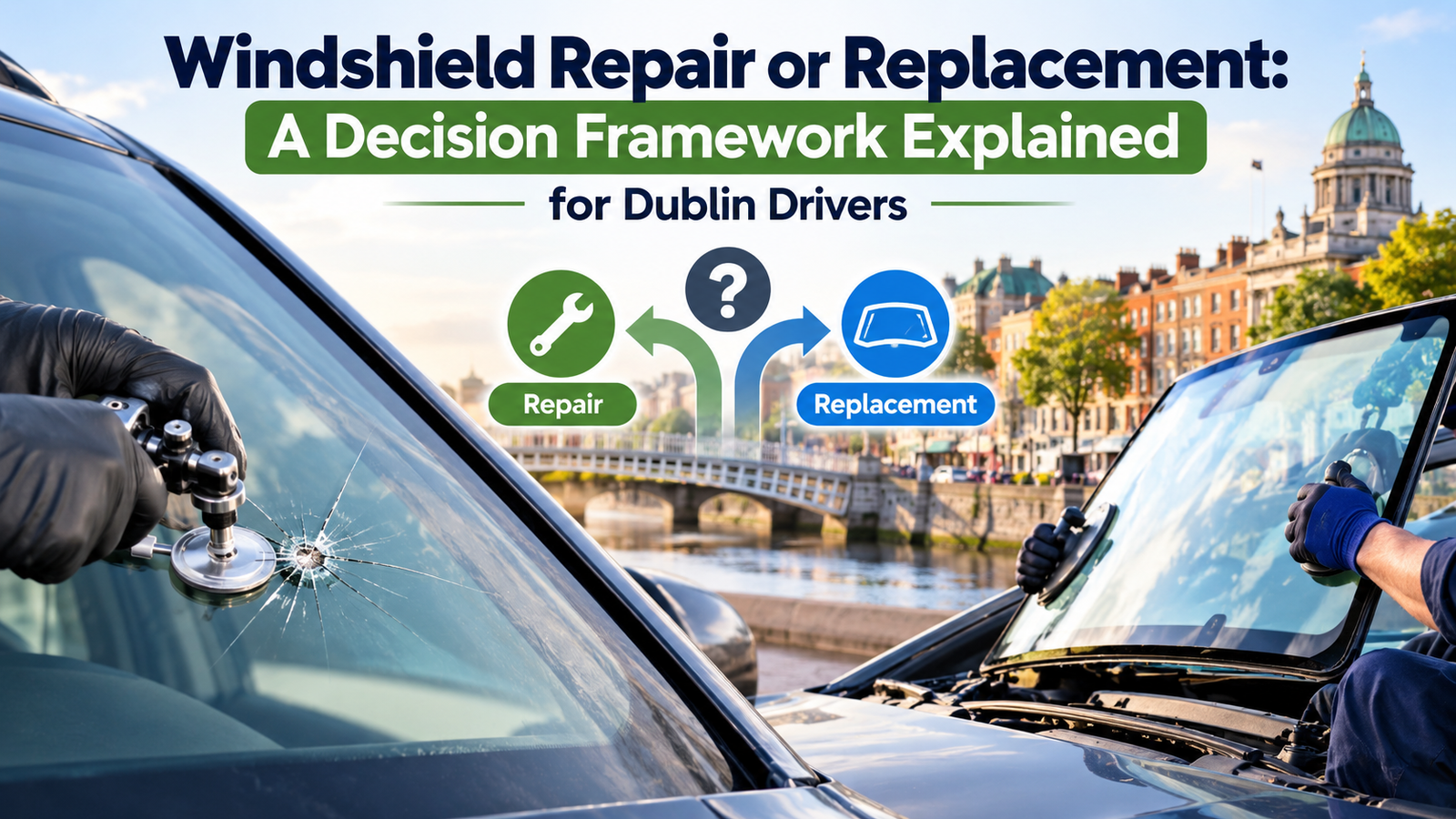
Few car problems create as much uncertainty as a damaged windshield. A small chip appears after a stone strikes the glass, and suddenly there is a question that seems simple but is not: can this be fixed, or does the whole windshield have to come out? The answer depends on a set of factors that professionals evaluate almost automatically, yet that are rarely explained to the driver. Knowing what those factors are removes much of the mystery.
This guide lays out the framework used to decide between repair and replacement, in plain language and without recommending any specific provider or action. It covers how Windshield Repair or replacement Dublin are built, what kinds of damage occur, the criteria that point one way or the other, how modern driver assistance technology complicates the decision, and how legal and safety considerations fit in. Where relevant it draws on conditions around Dublin, California, a Tri-Valley city in eastern Alameda County, where Interstate 580 and Interstate 680 meet and where long commutes and hot summers shape the kinds of glass damage drivers see. It is general information, and no description here can replace the judgment of someone who has examined a particular piece of glass.
How a Windshield Is Built
The modern windshield is laminated safety glass. Two sheets of glass are bonded to a clear plastic interlayer, usually polyvinyl butyral, commonly abbreviated PVB. The sandwich is heated and pressed so that the layers fuse. This construction matters for three reasons.
It holds together when broken. If the outer glass cracks, the interlayer keeps fragments in place, protecting occupants and maintaining visibility.
It contributes to vehicle structure. The windshield is bonded to the body and supports the roof, helps airbags deploy properly, and resists rollover crush.
It makes repair possible. Because the interlayer holds the glass together, a chip in the outer layer can often be filled with resin without disturbing the rest of the structure.
The outer layer faces the weather and the road. The inner layer faces the cabin. Most chips affect only the outer layer, at least at first.
Types of Damage
Different kinds of damage behave differently, and part of the framework is simply identifying what is present.
Bullseye. A circular break, often with a dark center, produced by a direct strike.
Star break. A central impact point with short cracks radiating out.
Combination break. A mix of bullseye and star features.
Half moon. A semicircular break.
Pit. A tiny crater without cracks, where a particle has removed a small piece of surface glass.
Short crack. A single line crack, often beginning at a chip.
Long crack. A crack that spans a large part of the windshield.
Edge crack. A crack beginning within a couple of inches of the glass perimeter.
Stress crack. A crack that develops without any visible impact, usually from temperature changes acting on a flaw or from body flexing.
Each type has typical repair prospects, which feed into the criteria below.
The Core Criteria
The decision generally rests on six categories of questions.
1. Size
Common industry guidance suggests that chips smaller than about a quarter to a half dollar in diameter can often be repaired, and that single cracks up to a few inches, and in some cases longer, may be treated. Beyond those dimensions, resin cannot reliably restore strength and clarity. Specific limits vary by provider, equipment, and standards.
2. Depth
If the damage has penetrated through the outer layer and reached the interlayer, or beyond, repair is less likely to succeed. Resin flows into the damaged zone, and deeper damage may not fill fully or may leave the structure compromised.
3. Location
Where the damage sits matters as much as how large it is.
- Driver’s line of sight. Repairs leave a slight optical blemish in some cases, and a visible distortion in the driver’s critical viewing area can be a reason to replace.
- Edges. Damage near the perimeter weakens the bond zone and tends to spread, since edges are under stress.
- Sensor zones. Areas in front of cameras and sensors may need to be free of any distortion.
4. Contamination
Moisture, dirt, and debris inside a break interfere with resin bonding. A chip that has been open for weeks, through rain and car washes, may fill poorly. Clean, recent damage generally gives better results.
5. Number and Pattern
Multiple chips in close proximity can weaken the glass between them. Damage that has begun to crack outward from several points may be too extensive for repair.
6. Age and Condition of the Glass
Older windshields with significant pitting, scratching, or previous repairs may be better candidates for replacement. Glass that has been repeatedly stressed is more prone to cracking.
Summary Table
| Condition | Often suited to repair | Often suited to replacement |
|---|---|---|
| Chip size | Small, coin sized or less | Large or irregular |
| Crack length | Short, a few inches | Long, spanning the glass |
| Depth | Outer layer | Through to the interlayer or inner layer |
| Position | Away from edges and sight line | Near the edge or in direct view |
| Contamination | Fresh, clean | Dirty, wet, or long exposed |
| Number of breaks | One or two small | Several, clustered |
| Technology | No sensor interference | In a camera or sensor area |
Real situations seldom match the table perfectly, which is why professional judgment adds value.
What Repair Actually Involves
Understanding the repair process also clarifies what it can and cannot do.
- The damaged area is inspected and cleaned of loose glass and debris.
- A small bridge or injector is mounted over the break.
- A vacuum draws air out of the damage, and pressure then forces clear resin into the cracks.
- Ultraviolet light cures the resin, hardening it.
- Excess resin is scraped away, and the surface is polished.
The goals of repair are to stop the damage from spreading, restore structural integrity, and improve clarity. Repair rarely makes damage entirely invisible. A faint mark often remains, which is expected.
What Replacement Involves
Replacement removes the entire windshield and installs a new one. The steps include removing trim and wipers, cutting the adhesive bond, lifting out the old glass, preparing the frame, applying fresh urethane adhesive, setting the new glass, reinstalling parts, and allowing the adhesive to cure. If the vehicle has driver assistance cameras, calibration is typically part of the process.
Replacement restores the original condition of the glass and eliminates the damage entirely, but it involves more steps and more time than repair, and the quality of the adhesive bond becomes a critical factor.
The Role of Driver Assistance Technology
The shift to vehicles with advanced driver assistance systems has altered the repair or replace analysis.
Camera and sensor mounting. Many cameras sit behind the windshield. Damage or repairs in the camera’s field of view can interfere with how the system reads the road.
Calibration after replacement. Replacing the glass changes the geometry slightly, so the camera usually requires recalibration. This can be done with targets in a controlled space or by driving on the road, as specified by the manufacturer.
Glass specifications. Windshields in these vehicles often have specific optical properties, brackets, and coatings. The replacement glass should match the requirements.
Warning and system messages. If a camera is not aligned, the vehicle may display messages or disable features such as lane keeping and automatic braking.
Because of these factors, some shops are cautious about repairing damage in the camera view area, and some vehicle makers publish guidance about where repairs are or are not appropriate.
Safety Considerations
Beyond the practical, there are real safety reasons for taking glass damage seriously.
- Structural role. The windshield provides support during collisions and rollovers and helps the passenger airbag deploy against it.
- Visibility. Cracks and distortions scatter light, especially at night or facing the sun.
- Spread risk. A small chip is a stress concentrator. It can grow suddenly under temperature change, vibration, or pressure.
- Hazard from fragments. Severely damaged glass may shed particles.
A damaged windshield does not always call for immediate action, but over time the risks tend to increase, not decrease.
Legal and Inspection Aspects
Vehicle codes in many states restrict driving with cracked or obstructed windshields, particularly where damage affects the driver’s view. In California, the vehicle code includes provisions about obstructions and material on the windshield, and law enforcement may cite drivers for significant damage. Rules differ by jurisdiction and are subject to change, so the specifics are best confirmed with the California Department of Motor Vehicles or the California Highway Patrol.
Insurance and Terminology
Insurance policies often treat windshield damage under comprehensive coverage, and some policies include special glass provisions. Terms and eligibility vary widely, so the policy language and the insurer’s own documentation are the authoritative sources. This guide does not address amounts or recommend any claim approach.
Dublin and Tri-Valley Factors
Dublin’s location creates a particular profile of windshield exposure.
Interstate commuting. Interstate 580 and Interstate 680 carry commuters and freight, and construction aggregate, tire debris, and gravel from trucks produce frequent strikes.
Highway 84 and rural roads. Routes toward Livermore and the surrounding hills may involve gravel shoulders and agricultural traffic.
Hot, dry summers. Inland Tri-Valley summers are warm, and parked cars bake in the sun. Rapid cooling by the air conditioner subjects hot glass to thermal stress.
Cool mornings and marine influence. Temperature swings between night and day can be substantial, particularly in cooler months.
New development. The area has seen considerable construction and growth, bringing dust, debris, and construction vehicles onto roads.
Technology rich vehicles. Many commuters drive newer vehicles with driver assistance features, raising the importance of sensor and calibration considerations.
Parking lots and shopping areas. Dense lots at shopping centers and workplaces increase exposure to minor impacts and sun heat.
Habits That Influence the Decision
Some everyday choices make repair more likely to succeed or less likely.
- Cover a fresh chip. A piece of clear tape over the impact point can keep out moisture and dirt until it is evaluated.
- Avoid pressing on the chip. Pushing or picking at the damage can break loose more glass.
- Avoid sudden temperature extremes. Blasting a hot windshield with cold air or washing it with cold water can start a crack.
- Keep away from car washes with high pressure. Pressure can force water and soap into a break.
- Note the damage promptly. Photographing the damage and its position can help later evaluation.
- Drive carefully. Potholes and slamming doors can flex the glass and extend a crack.
Common Misunderstandings
“A chip is only cosmetic.” It affects a structural, laminated component and can grow.
“If it is not in my line of sight, it does not matter.” Location influences repair choices, but damage anywhere can spread.
“Repair makes the chip vanish.” Repair stabilizes and improves appearance, though a faint mark often remains.
“Replacement always means a better result.” A correctly performed repair can be fully effective, and replacement quality depends on bonding and calibration.
“A crack that is not growing is safe.” Cracks can remain stable and then extend with a temperature swing.
“All windshields are interchangeable.” Features such as sensors and coatings differ by model.
Frequently Asked Questions
Can every windshield chip be repaired?
No. Size, depth, location, contamination, and the presence of sensors all influence whether repair is appropriate.
How big can a crack be and still be repaired?
Many sources cite short cracks of a few inches as repairable, with some providers able to handle longer ones under specific conditions. Limits vary.
Does a repaired chip remain visible?
Often a faint mark remains. The purpose of repair is to stop spreading and restore strength, not to erase the damage entirely.
Why does damage near the edge usually require replacement?
The edge is a high stress area where the glass is bonded to the frame. Cracks there tend to run and compromise the bond.
How long can a chip be left before it must be addressed?
There is no fixed deadline. Fresh, clean chips repair best, and exposure to moisture and dirt reduces success over time.
Will a new windshield need calibration?
On vehicles with forward cameras, calibration is commonly required after replacement, according to the manufacturer’s procedures.
Is it legal to drive with a cracked windshield?
It depends on the extent and location of the damage and on local law. Cracks that obstruct the driver’s view may be cited.
Does weather affect the choice?
Weather affects how repairs are done, since resin needs dry conditions, and extreme temperatures can make cracks spread.
Can a windshield be repaired more than once?
Multiple repairs in the same windshield are possible, though many small repairs close together may point toward replacement.
Final Thoughts
The question of repair versus replacement is best understood as a structured assessment rather than a guess. Size, depth, location, cleanliness, number of breaks, glass condition, and onboard technology each carry weight, and together they point toward a sensible conclusion in most cases.
For readers learning about windshield repair or replacement in Dublin, the most valuable takeaway is that the decision follows from observable facts about the damage and the vehicle. With that framework in mind, conversations about glass become clearer, and the reasons behind each recommendation are easier to follow.